To be, or not to be

This might be my most foolish blog post yet. I’m going to try to tackle one of my favorite scenes in literature: the “to be, or not to be” speech from Hamlet by William Shakespeare.
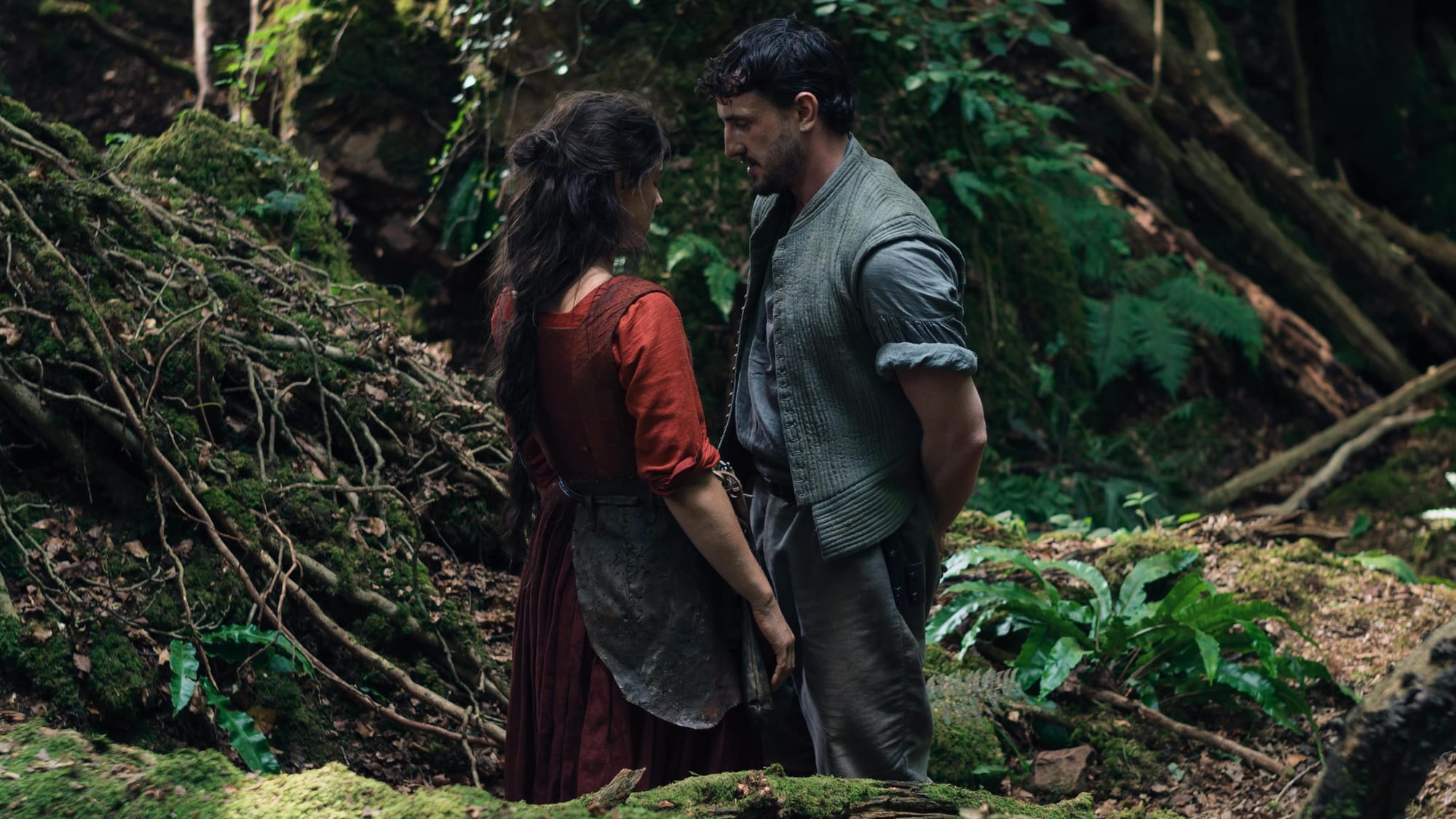
Shakespeare is getting a lot of attention recently with the release of Hamnet. The film, starring Paul Mescal as Shakespeare and Jessie Buckley as his wife Anne Hathaway, takes the factual passing of his son’s death and supposes that the incident was the inspiration for the famous play.
"Hamnet and Hamlet are in fact the same name, entirely interchangeable in Stratford records in the late sixteenth and early seventeenth centuries." – Stephen Greenblatt, quoted in Hamnet
We know shockingly little about arguably the most influential writer in the English language; however, we do know that he had a son named Hamnet and that he wrote a play called Hamlet.
We don’t know how his son died. We don’t have any personal documents on Shakespeare’s grief or feelings on this matter (or any others). We can only imagine how this moment impacted his family, which is exactly what Maggie O’Farrell, the author of Hamnet, does.
To suggest that Hamlet draws some inspiration from his son’s passing doesn’t feel too outlandish to me. I can reasonably buy into the suggestion that Shakespeare knew about the connection between these names, despite any historical proof. It seems like a very good guess.
This connection doesn’t wildly change the way I look at Hamlet, but upon returning to the “to be, or not to be” speech, I found myself more moved by it knowing that Shakespeare may have been thinking on his son’s death when writing it.
I’ll include lines of the speech as I go through it, but seeing Shakespeare performed often helps understand his words better. I’ll include a link to a performance of the speech below.
The speech starts with some of the most famous words in English literature:
To be, or not to be, that is the question
Hamlet ponders his existence, his being. Earlier in the play, the ghost of Hamlet’s dead father visits him, telling Hamlet that his uncle killed him, and demands that his son avenge his death.
Now, later in the play, Hamlet contemplates his own existence. Is it better to live or to die, to not be? Can he endure this pain he feels from his father’s passing? Or will it overcome him?
Whether 'tis nobler in the mind to suffer
The slings and arrows of outrageous fortune,
Or to take arms against a sea of troubles
And by opposing end them.
Despite how hard we may try, life contains suffering. We all will experience multiple doses of pain (physical, emotional, spiritual) throughout our lives. Some might even bear an “outrageous” amount. This is inevitable.
The only way to end this suffering is “to take arms” against it. Hamlet is saying that death is when the suffering stops. We only end our suffering when we die.
To die—to sleep,
No more; and by a sleep to say we end
The heart-ache and the thousand natural shocks
That flesh is heir to: 'tis a consummation
Devoutly to be wish'd.
At first, Hamlet considers death to be like sleep, a ceasing of pain and awareness. We don’t experience pain the same way when we sleep. It’s common for sleep to bring relief.
Oftentimes, when I’m sick and run a fever, I just want to be able to sleep because the aches and pains disappear. Sleep might be the remedy for which Hamlet seeks.
To die, to sleep;
To sleep, perchance to dream—ay, there's the rub:
For in that sleep of death what dreams may come,
When we have shuffled off this mortal coil,
Must give us pause—there's the respect
That makes calamity of so long life.
Hamlet repeats this idea. Death is like sleep, but that’s the issue. “There’s the rub.”
When we go to bed at night, we don’t know if we’ll spend the time dreaming or having nightmares. We don’t know what’s to come.
Death is the same. We don’t know what’s for us beyond the veil. We have beliefs, religions, but there’s a deal of faith that gives Hamlet pause. The uncertainty keeps him tethered to his life despite the pain he experiences.
For who would bear the whips and scorns of time,
Th'oppressor's wrong, the proud man's contumely,
The pangs of dispriz'd love, the law's delay,
The insolence of office, and the spurns
That patient merit of th'unworthy takes,
When he himself might his quietus make
With a bare bodkin?
Here Hamlet lists off the main types of pains we might experience in life. I’m constantly shocked at how relevant this list feels today.
“The oppressor’s wrong” is felt by citizens of nations currently. “The law’s delay” and the “insolence of office” could be found in any periodical any day of the week, regardless of your political leaning. These are modern pains.
Why would we endure these pains if something didn’t keep us tethered to life? Hamlet tries to understand why anyone perseveres when the world is so full of corruption.
Who would fardels bear,
To grunt and sweat under a weary life,
But that the dread of something after death,
The undiscovere'd country, from whose bourn
No traveller returns, puzzles the will,
And makes us rather bear those ills we have
Than fly to others that we know not of?
Hamlet looks at this question another way. Why toil? Why suffer if not for some uncertainty that keeps us going?
Maybe some have certainty about what lies beyond, but again, this requires faith, and no one has gone to that “undiscovere’d country” and returned to tell us what lies ahead.
Hamlet believes the uncertainty of death keeps us going.
Thus conscience doth make cowards of us all,
And thus the native hue of resolution
Is sicklied o'er with the pale cast of thought,
And enterprises of great pith and moment
With this regard their currents turn awry
And lose the name of action.
Our “conscience…make[s] cowards of us all.” This ability to consider what comes after death “give[s] us pause.” Hamlet clings to this life (and his pain) despite not wanting to because he doesn’t know what comes after.
Will there be vengeance for his father if he doesn’t carry it out? Is there some sort of karmic scale? He does not know and comes to the realization that he must act himself.
I’ve always been drawn to this soliloquy. Despite being from the 17th century, the thought process through which Hamlet works feels incredibly relevant still (which is what makes Shakespeare such a timeless literary figure).
The speech carries even more weight when I consider its relevance to the passing of Shakespeare’s son.
Any connection is mere speculation (we almost certainly will never find any evidence connecting the play with his son), but I can buy into the theory.
Wouldn’t Shakespeare feel just like Hamlet in this moment? The character has lost his father; the playwright, his son. Is this speech Shakespeare himself grappling with some reason to endure beyond tragedy? Possibly. Shakespeare does in fact continue living 20 years after his son’s death.
Good art draws from life to create something powerful. Shakespeare does this so well, creating characters that are as complex as the real world and tackling topics that endure to the present day.
If anything, I’m glad I read and watched Hamnet to revisit a favorite play and to consider another perspective for the “to be, or not to be” speech. As famous as he is, Shakespeare is still a bit mysterious. It’s interesting to imagine how the man might’ve felt, his grief, when he wrote some of his most famous words.
If you made it this far, please consider subscribing so that the next post gets delivered straight to your inbox!