What Even Is Art?

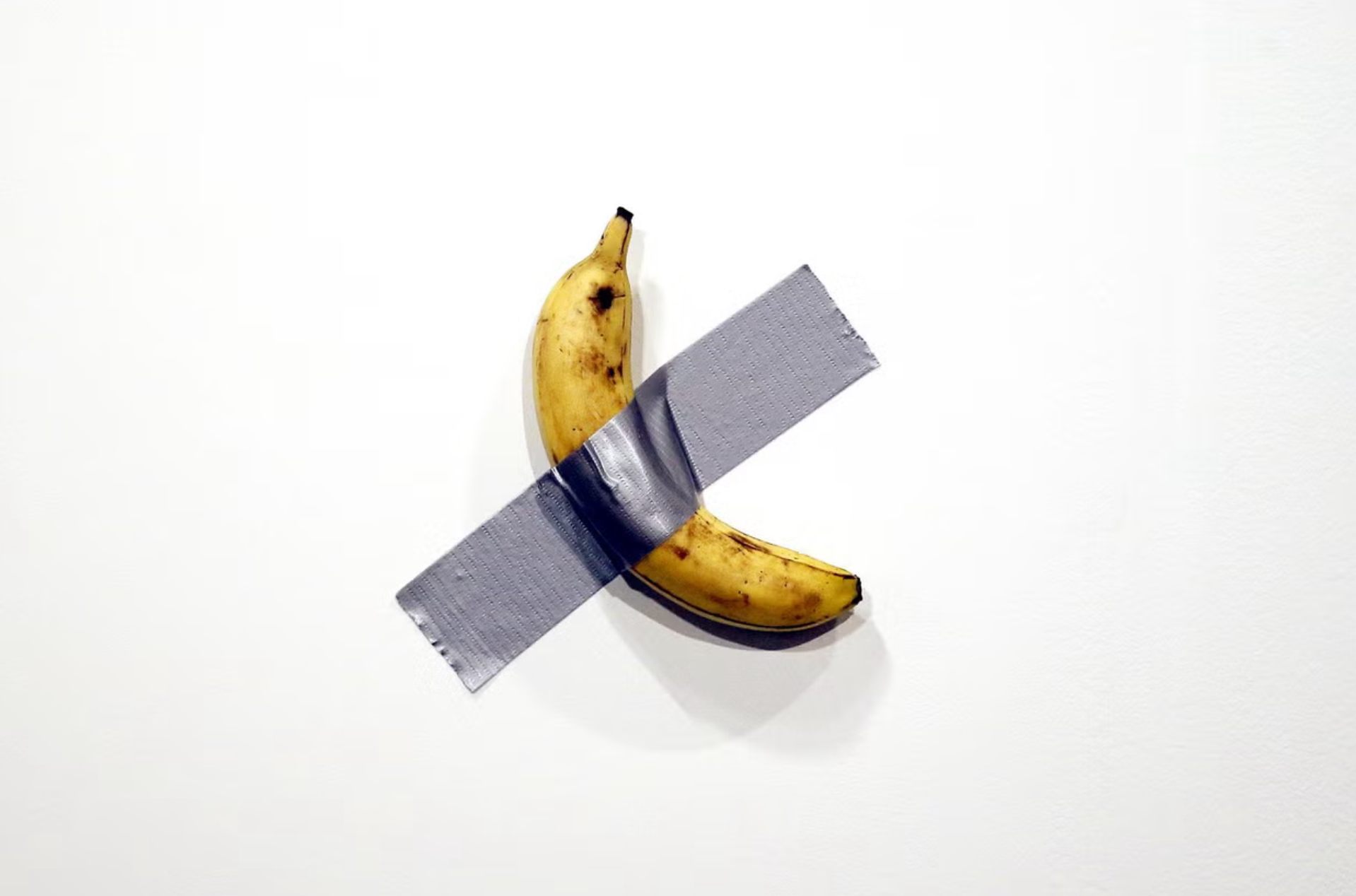
I’ve been thinking a lot on the definition of art recently.
The main reason why is because I’ve been reading What Is Art? by Leo Tolstoy. The book is a bit dry (it’s a long essay written at the end of the author’s life), but it’s interesting.
Tolstoy's Definition of Art
Essentially, late in Tolstoy’s life, the author, famous for literary heavyweights such as War and Peace and Anna Karenina, had a “come to Jesus” moment. He became disenchanted with modern art, seeing it as an activity exclusively for the upper classes instead of for everyone.
Tolstoy considers the art of his time, the art of the upper class, to be made for the sake of pleasure. At first, I wasn’t sure I saw an issue with this. Art is enjoyable after all, right? It seems like Tolstoy is going to fight an uphill battle.
Then he goes on to define his version of art: something that evokes a feeling in the viewer or consumer, which more accurate to me than art for the sake of pleasure. Tolstoy’s definition of art is that it must be infectious, and I would bet that many of us understand this interpretation.
Art Is Infectious
Music immediately jumps out as one way that art is infectious. How often have we listened to a song and felt our foot instinctively tap along? Music seems to have a power to infect our mood. If I really want to cry, all I have to do is put on “Fix You” by Coldplay. The tears begin to well up moments later.
This certainly applies to other forms of art too. One of my favorite movies from last year was Superman (2025). (In fact, the movie inspired its own post from last summer.) Walking out of the theater with a smile, I felt a sense of hope afterwards and wanted to share the experience with others. Sure, Superman might not be the highest form of art, but it did infect at least one viewer with its sense of emotion.
Another reason I found myself agreeing with Tolstoy on his definition was because art shouldn’t exclusively be pleasurable, at least not in the simplest definition of the word. We should struggle with art that doesn’t make us feel good. It’s just as important to watch movies like Schindler’s List or Manchester by the Sea. Just as some movies can infect you with positive feelings, others can leave you with a sense of sadness that might not be considered traditionally pleasurable. (I add “traditionally” because often there is something paradoxically pleasurable about grappling with complex materials.)
Keeping in mind the feelings evoked by art is one of the best ways to understand and appreciate it.
A History of the Human Condition
If art is something that evokes a feeling in the consumer, it must evoke a similar feeling in the creator. On a larger level, art is just a way for people to convey emotions to each other. Tolstoy compares art to history. Where history is the passing down of human events, art is the transfer of the human condition through time.
This consideration of art actually reassures me in the age of AI slop for two reasons.
First, there’s still a reason to create art because it helps the creator unpack their own emotions. The creation of art serves a purpose for its creator, not just the consumer.
Second, emotion is (for now at least) an inherently human thing. So long as that remains the case, only humans can create art for humans.
We haven’t created artificial consciousness yet. No LLM can truly understand the human condition; rather, an LLM will just take its best guess to spit out text in a certain order. If you ask ChatGPT to write a story, it’ll source its output from whatever it finds online. It won’t take from its own lived experiences to craft something new…because it can’t.
Troy Baker, a video game voice actor known for roles such as Joel Miller in The Last of Us, put it well in a recent interview: AI can make content rapidly, but it can’t make art because that requires the human experience.
It Takes Time
When writing for this blog (not that I consider this art; it’s more like a pseudo-journal), I sometimes find myself in the mindset of thinking about the outcome. I need to get a post out each week.
Yet, when I think that way, it seems like a tougher hill to climb.
What I’ve been trying to remind myself is that the point is the doing. As I work through a post each week, I’m grappling with a topic and uncovering how I truly feel about something.
Writing is one of the best ways to think actively. The point isn’t (entirely) to have something published each week. It’s to work through what’s on my mind and how I see the world, which invariably requires time spent with a subject.
It’s easy to get caught up in an outcomes-based way of life, especially when many of us work in corporate jobs that are heavily connected to measurable outcomes (KPIs anyone?), but that’s not the point of life.
Sipping a good cup of coffee isn’t about racing to the bottom of the mug. The same applies to life. It’s not a speed-run where we try to reach the end as fast as possible. It is something to be savored. We should experience all of what life has to offer, the good and the bad, and art (human-made art) is just one part that makes life enjoyable.
If you made it this far, please consider subscribing so that the next post gets delivered straight to your inbox!