Be Like Water: Applying Bruce Lee's Famous Lesson
When starting a new habit, it’s common to feel a sort of friction, but when is it too much? This week, I explore how changing the timing of a habit helped me complete it much more easily and how we can consider Bruce Lee’s “be like water” ideology to help us move more effortlessly through life.

I sometimes write about the new habits I’m trying and different ways to make them stick. One recent habit was giving me a bit of a hard time.
Inspired by the same video that talks about keeping a zibaldone, I’m trying to get into the practice of writing a little story every day. Just a few lines. The idea is that over time I’ll be able to reflect back on a given day and remind myself what made that day special. Matthew Dicks, author and storyteller, calls this practice ‘Homework for Life.’
Finding the Habit Flow
I set up my habit tracker, intending to complete this practice each night before bed. Since this is such a quick little act, I aimed to do it every day, which is more than I’d usually do when starting a habit. I thought this would be manageable, nevertheless.
Starting Off
The first couple days (like with most habits) went well. I was doing the habit successfully. I was tracking the habit in my app. Everything was good. After a couple weeks, though, the habit got a lot harder to complete. I started missing completions, and every 5 days or so, I would bulk write a bunch of stories.
This wasn’t the worst thing in the world. My brain is still sharp enough to recall a small moment from a few days prior, but the point of the activity was to reflect on each day, something I was missing by taking this bulk approach.
It took me weeks of inconsistent practice before I considered a new approach.
Early Bird or Night Owl?
I’ve never really considered myself an early bird or a night owl. I don’t love waking up super early, nor do I find myself particularly efficient working late into the night. In college, I could never really pull an all-nighter. There always came a certain point in the night where I felt my efforts were no longer achieving much. The juice wasn’t worth the squeeze.

Don’t get me wrong: I still had my fair share of late nights in the library, but I don’t think they were necessarily the best use of time.
Reflecting on my evening attitudes (something I track using the app How We Feel), I had an epiphany. What if I tried doing my story in the morning? Instead of trying to force myself to do the practice right before bed, I would try to do it the next morning. Sure, that’s not the same day, but doing it the morning after is close enough while also giving me some time to sleep on ideas.
The Right Time
I made this shift to the morning a couple weeks ago, and I haven’t missed a day since. It’s almost effortless (for me) to do the practice in the morning. I face very little internal resistance, and I enjoy the act significantly more.
Be Like Water
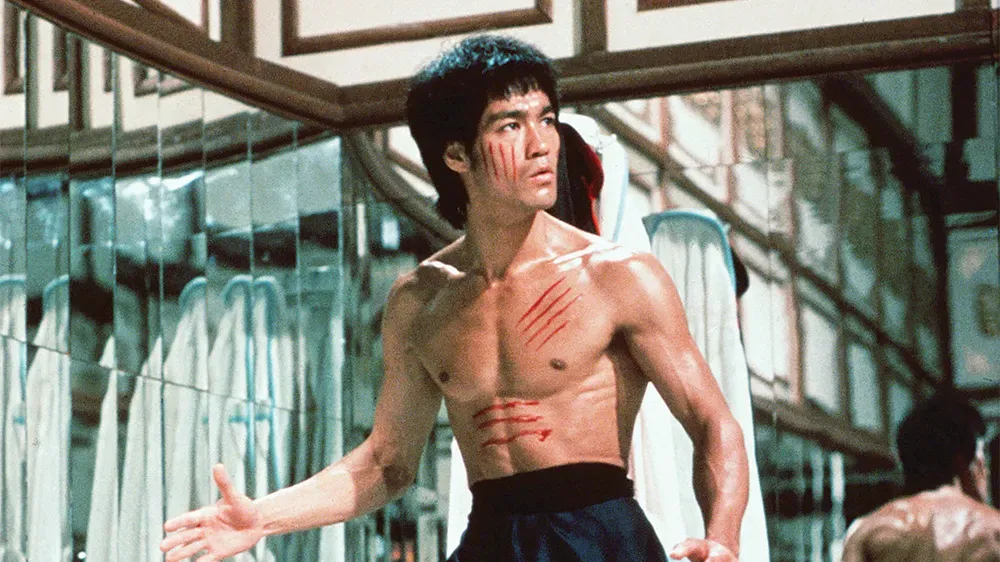
This feeling of effortlessness reminded me of the great Bruce Lee.
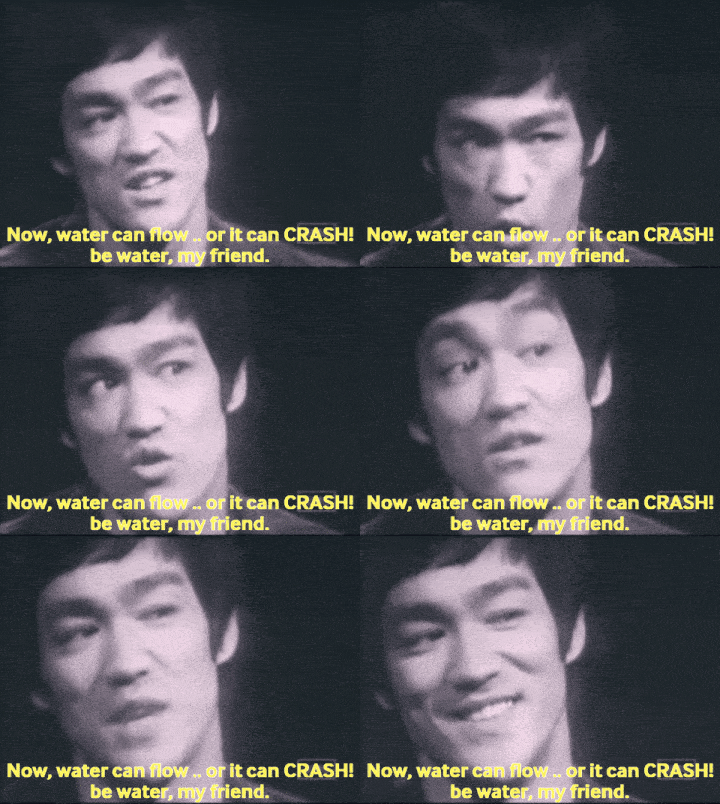
Be like water making its way through cracks. Do not be assertive, but adjust to the object, and you shall find a way around or through it. If nothing within you stays rigid, outward things will disclose themselves… Now, water can flow or it can crash. Be water, my friend.
– Bruce Lee
Bruce Lee is famous for his “be like water” quote (among other things). It’s a mindful approach to the world around us. In my example, doing my habit in the morning was the “be like water” approach. It almost seems like my brain wants to do the activity in the morning. That’s the way the water flows.
Finding the Bends
Lee wasn’t always so readily accepting of the “be like water” approach. Maria Popova writes about Lee’s struggle with the Taoist ideology, pulling from the book Bruce Lee: Artist of Life.
Preserve yourself by following the natural bends of things and don’t interfere. Remember never to assert yourself against nature; never be in frontal opposition to any problems, but control it by swinging with it. Don’t practice this week: Go home and think about it.
– Bruce Lee, quoting his instructor
What Lee describes above is closely related to the Taoist idea of wu wei (pronounced oooo-way). Wu wei translates directly as “no doing” or “no trying,” but if the idea were more accurately to be translated, it would mean “effortless action.” It’s an idea eerily similar to the flow state.
Easier Said Than Done
The hardest part about wu wei or flow is that they’re easier said than done. Even Lee recalls his instructor specifically telling him, “Don’t practice this.” Effortless action isn’t a feeling one can call up on demand, it can only be cultivated under certain conditions, some of which might be out of our immediate control.
Lee goes on to describe the moment the “be like water” metaphor really struck him, hammering home this concept of wu wei:
On the sea I thought of all my past training and got mad at myself and punched the water! Right then — at that moment — a thought suddenly struck me; was not this water the very essence of gung fu? Hadn’t this water just now illustrated to me the principle of gung fu? I struck it but it did not suffer hurt. Again I struck it with all of my might — yet it was not wounded! … That was it! I wanted to be like the nature of water.
– Bruce Lee
The Nature of Water
Lee, someone who I certainly wouldn’t have wanted to get punched by, strikes the water and watches it immediately replace itself. He can’t hurt the water no matter how hard he tries. Each attempt to punch the water results in the water simply returning to the way it was.
In my example from above, my habit initially wasn’t like water. I was trying to do a habit in a way that wasn’t exactly natural to me. Something about my internal configuration pushed back from doing this mini journaling practice before bed.
It took a guess on my end, but shifting to the morning ended up being the right move for me. Now, I sit down at my desk in the morning, journal, then reflect on my story from the day before. It all flows naturally, allowing me to complete the habit even on weekends, a time that can be somewhat tricky for me when it comes to completing habits.
Surrender to the Stream
Many desirable states — happiness, attractiveness, spontaneity — are best pursued indirectly, and conscious thought and effortful striving can actually interfere with their attainment.
– Edward Slingerland, on wu wei
It’s not uncommon to find areas of resistance in our life. Starting something new can be (and often is) difficult. Resistance is worth examining, though. Is the friction we face necessary? Are we fighting through growing pains or is there a better way forward?
I’ve come to realize (perhaps I’ve known on some intuitive level) that I am better at doing creative work first thing in the morning when my brain is fresh. That’s just the way my brain works. I can choose to push back against that, growing frustrated when an evening results in little work getting done, or I can accept that part of me and work with it.
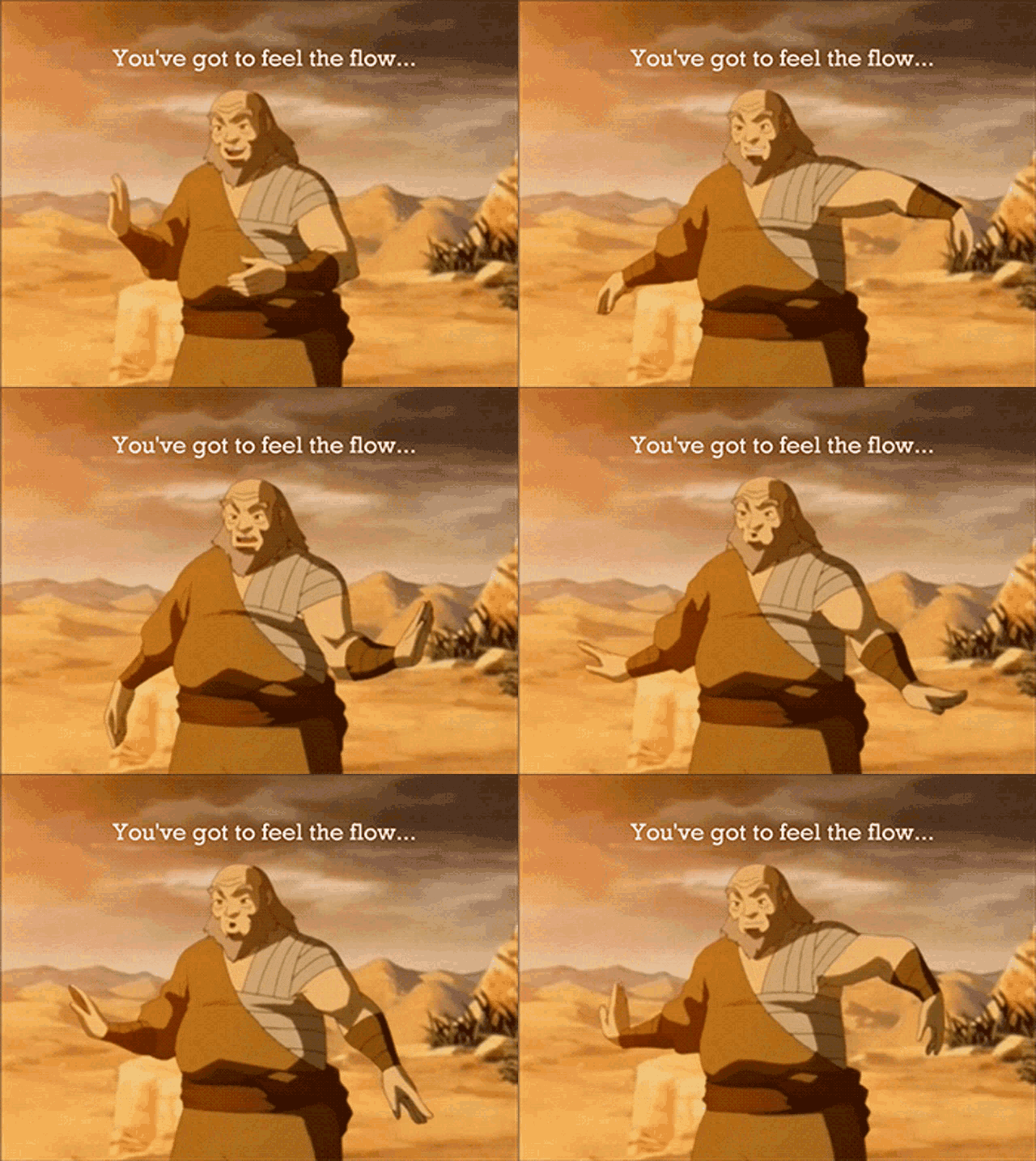
When we flow with the stream of our being, we’re able to go much farther. This isn’t to say we should retreat at the first sign of friction in our lives. Wu wei isn’t about not trying; it’s about being relaxed in the process. It reminds us to not only go with the flow but to understand where it wants to take us.
If you found this post interesting, please consider subscribing so that the next post gets delivered straight to your inbox!