You Should Read: Enshittification
Cory Doctorow's book breaks down just exactly why the internet sucks so much now and leaves us with some optimism for the future.

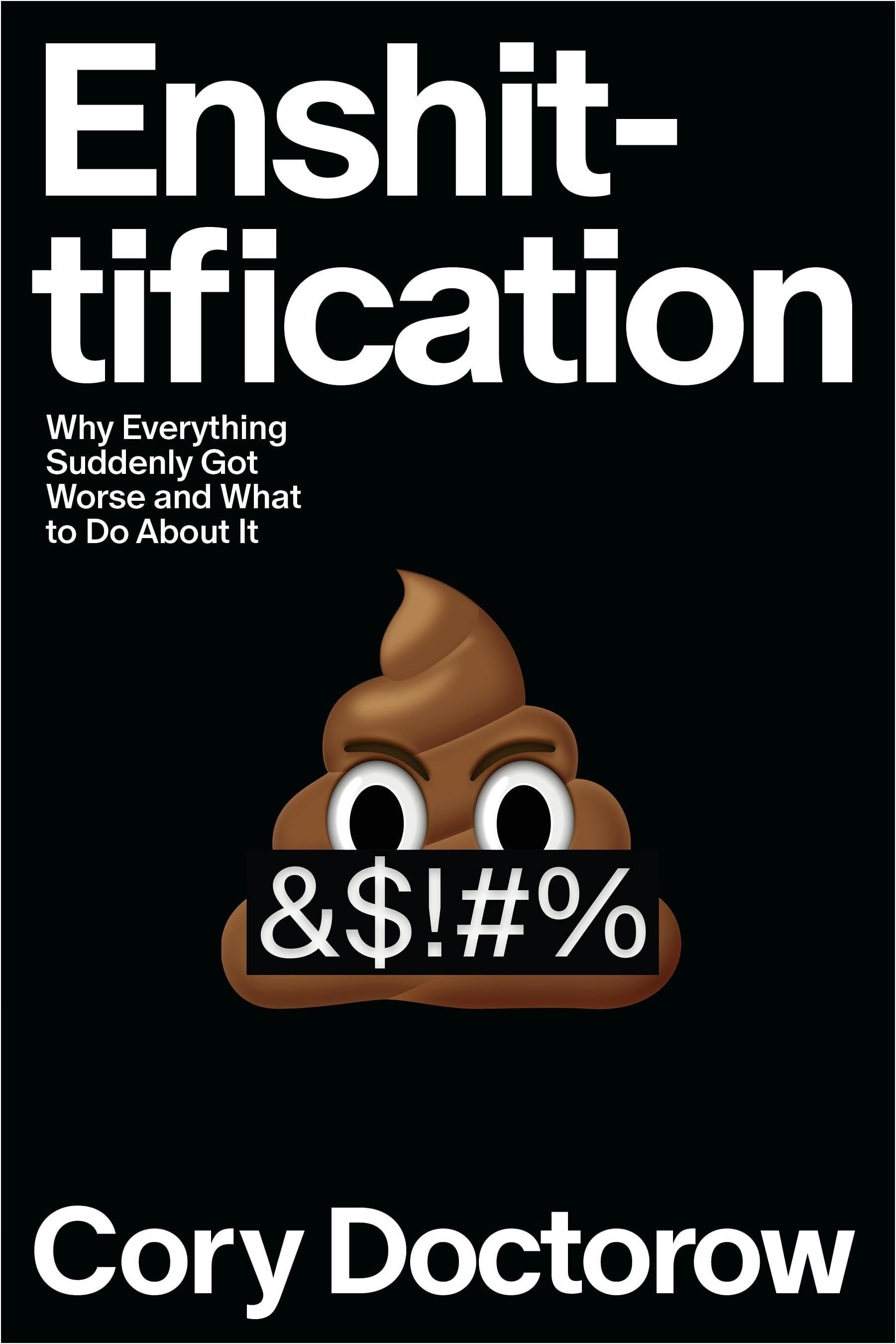
I'm normally not the biggest fan of non-fiction books. Just recently, I've been attempting to read through a history book, but so often can non-fiction books feel like a slog.
That is fortunately not the case with Enshittification by Cory Doctorow.
I know what you're thinking. You're judging a book by its cover, aren't you? I'll admit it's a little hard to take a book with the poop emoji on its cover seriously, but this might be one of the most important works of non-fiction to come out in the 2020s.
The poop emoji, while silly, connects directly with the "shit" in the title, Enshittification, which takes its name from that popular term floating around the internet. It's the all-too-easy answer to the question, "Why does everything suck right now?"
Cory Doctorow, the book's author, actually coined the word 'enshittification' back in 2022, but since then, the word's taken on a life of its own. It took the internet by storm as people embraced it as such a good way to describe what we're all experiencing.
There's a catch, though. Cory realized that we weren't all fully understanding what he meant when he coined the term. This book is his response to that issue and his attempt at helping us all better understand what's going on with the internet right now.
Enshittification is a simultaneously frustrating and fascinating read, one that's incredibly gripping for a work of non-fiction. It's one of the best books I've read this year, and I think you should make Enshittification your next read.
Here's why.
These Companies Are Not Your Friends
Throughout the course of Enshittification, Cory approaches the term as a disease and breaks it down into its corollary parts: the natural history, the pathology, the epidemiology, and - importantly - the cure.
Starting with the natural history, Cory analyzes some of the biggest companies in the world as enshittification case studies. He looks at Apple, Facebook, Amazon, and more.
It goes without saying, but these companies are not your friends. At first, they maybe seemed like it, but that's certainly not the case anymore.
Cory describes the process of enshittification - how these companies take advantage of us all - in four phases:
- First, these companies treat their users well
- Then, it shifts from being good to the users to being good to the business customers (think businesses buying ads on Facebook)
- Then, these companies take advantage of the business customers to take all the value for themselves
- Finally, we arrive at a shitty platform
This process can be applied to the aforementioned companies and more. Enshittification really is like a disease. Once you know how to spot the symptoms, you can see it everywhere.
Maybe the early days of Facebook pokes and Instagram likes were fun and innocent, but those days are a far cry from where we are now: companies taking advantage of everybody to squeeze out as many dollars as possible.
How Did We Get Here?
Getting you to believe these companies aren't your friend is the easy first step. Cory does that quickly and convincingly in the early part of the book.
A bulk of the book, however, is spent explaining how these companies are able to take advantage of the system to make things so shitty.
The short answer is monopolies (well, technically oligopolies, but Cory thinks that it's easier to use the word that more people are likely to know and understand).
Companies have been gobbling each other up more-or-less since the Carter administration. It's not uncommon to turn on the news and hear about a huge merger. Take this major example from the past week:
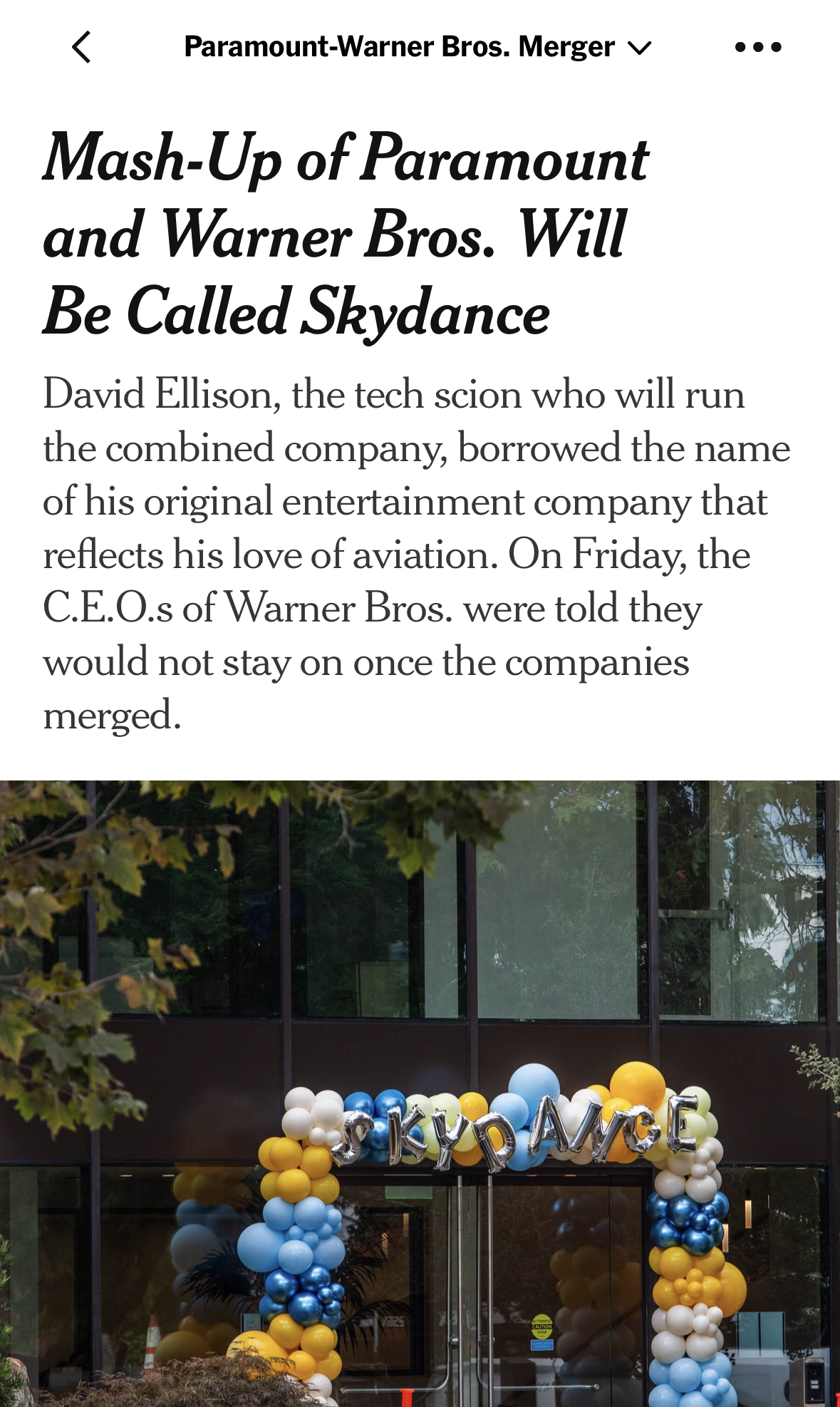
As these companies gobble each other up, there are fewer and fewer competitors out there. Fewer competitors, fewer reasons to be better than your competitors. Competition is a good thing! (This is a gross oversimplification of economics; Cory does a much better job with this nuance in the book.)
Put simply, Facebook and Google and Twitter and all these companies don't have to keep innovating and coming up with cool new features because they've eaten up all their competition. Now, they can focus on making as much money to line their own pockets as possible.
Cory makes something as mundane as government regulation seem interesting as he explains how exactly enshittification happened in the first place.
There Is a Cure!
I'd like to think I'm an optimist.
While I like reading about and better understanding the doom-and-gloom of the internet, I also want to know that things can get better. And that's exactly how Cory ends Enshittification.
Things on the internet seem awful right now. Social media is stealing every drop of attention it can get from us. Amazon is flooded with crappy products that are made by companies you've never heard of before. Google searches always start with too many ads before showing you a result that might answer your question (ignoring the AI overview of it all).
Things are bad. But they are also starting to get better.
Look at Google. When's the last time you considered that Google search could actually be better? Before reading this book, I don't think I ever thought about it. I just took search at face value, ads and all.
Search can be better! Look at kagi.com. Kagi is trying to make search useful again. Despite all these mega-corporations gobbling up competitors left-and-right, there are still companies out there doing good work.
Regulators are also still trying to regulate. Ok, maybe this isn't happening so much in the United States (and likely won't happen for the next 2 years at least), but the EU has begun to take steps to regulate these companies and force them to make more pro-consumer decisions. The fact that your iPhone has a USB-C port instead of the Apple-exclusive lightning port is thanks to Europe.
There are still people looking out for the little guys and trying to make the internet a better, more enjoyable place. Cory makes sure to end his book on a positive note.
If you're interested you can get a copy of Enshittification on Amazon (ironically), or even better, you can pick it up at your local bookstore.
If you've read Enshittification, what did you think? I'd love to get your thoughts below.