You Should Suck at More Things
Being bad at a new skill is never fun, but it can be a good thing. Realizing you're a novice means you're already starting to improve.

It really sucks being bad at something.
I’m not sure there’s a worse feeling than trying to do something and realizing you suck.
An example for me is running. During the pandemic, I ran a lot. I wasn’t the fastest runner in the world, but I started putting up some times that made me feel proud of myself.
Flash forward a few years, and I stopped running so much. I started a job after college, things got busy, and I put running off. In the back of my mind, I just kind of assumed that I’d be able to pick up running where I left it.
This was not the case.
When I started running again, I was slow. Even running leisurely felt uncomfortable when before I could do a 10-mile long run at an easy pace. The feeling of being bad at running again pained me.
I still haven’t made it back to where I was with running. I’ve still been inconsistent, and I haven’t made much progress. Does that surprise me? No, of course not.
What I need to remind myself of is that to get good at something, you must suck at it first.
Levin in the Fields
I’m working my way through the Russian epic Anna Karenina. Despite my progress moving more slowly than I’d like, I’m enjoying the journey.
One scene stood out to me.
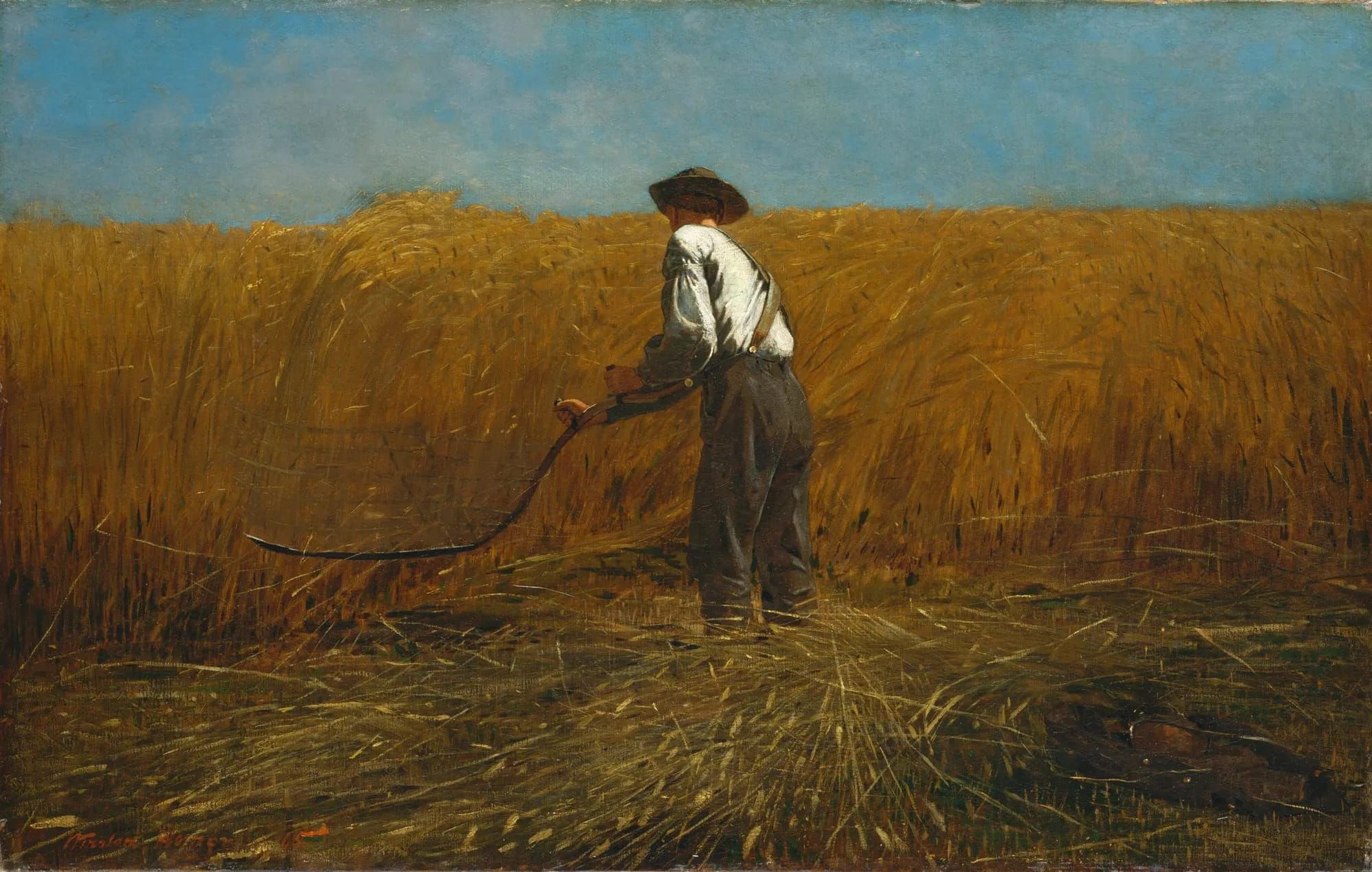
In Part 3, Chapters 4 and 5 of Anna Karenina, we see Levin, one of the dual protagonists, join the peasantry to mow his fields.
In Russia during the time of the novel, mowing was done with a scythe, and manual labor traditionally wasn’t performed by someone of Levin’s stature (a landowner). Levin insists on mowing because he enjoys the feeling it brings him.
When Levin picks up the scythe at first, he is terrible. Just like when I put on my running shoes after years away, Levin isn’t as a good as he imagined. The peasants out-pace him, and the work pains him.
Regardless, Levin persists.
The more he goes through the motions of cutting the long grass with the metal blade, the more the habit returns to him. He cuts faster. The pain dissipates. Eventually, Levin even enters a flow state.
“The longer Levin mowed, the more often he felt those moments of oblivion during which it was no longer his arms that swung the scythe, but the scythe itself that lent motion to his whole body, full of life and conscious of itself, and, as if by magic, without a thought of it, the work got rightly and neatly done on its own. These were the most blissful moments.” – Anna Karenina, Part 3, Chapter 5
Once he’s entered this sort of flow, Levin works through the day mostly in this state, losing track of time. What was once painful and slow is now effortless and ethereal.
The Four Stages of Competence
Benjamin McEvoy, in his Hardcore Literature Book Club, connects this scene of Levin mowing the fields with the four stages of competence.
The four stages of competence are…
- Unconscious incompetence
- Conscious incompetence
- Conscious competence
- Unconscious competence
You can imagine the four stages like a pyramid:
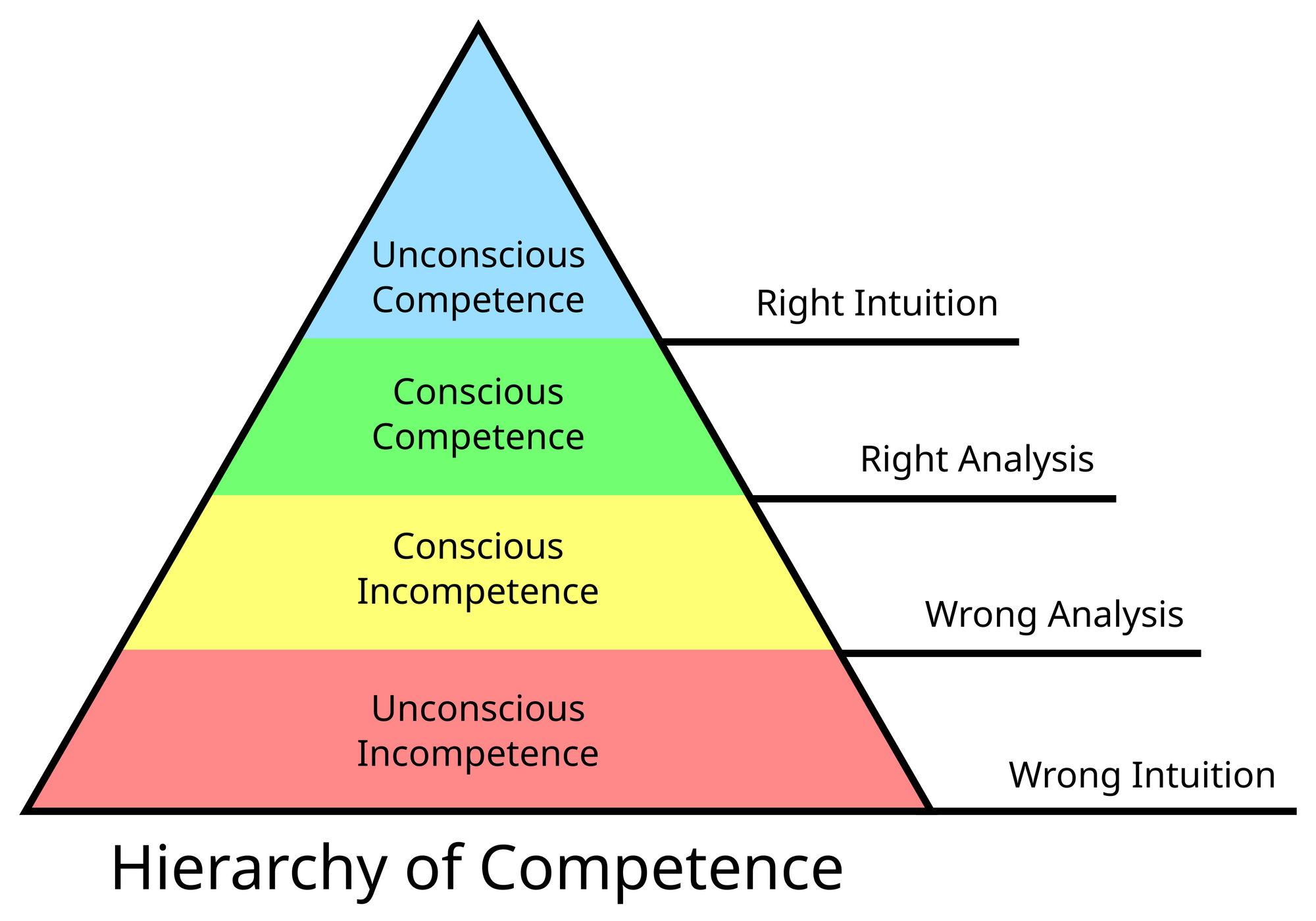
When you start a new skill, you begin at the bottom of the pyramid. Unconscious incompetence is when you’re not even aware of how bad you are.
Moving from unconscious to conscious incompetence is the most painful step on the journey. This step is when Levin’s body aches as the peasants mow quickly past him. It’s also when I went out for a run years later only to realize my pace was much slower than I hoped.
We must endure the discomfort of conscious incompetence to improve and eventually make our way toward conscious competence.
You're Already on Your Way
Becoming aware of how bad you are at something is a painful feeling, but it’s also a sign you’re on the right track.
In Anna Karenina, we see Levin move out of conscious incompetence into and even beyond conscious competence when he enters the flow state, and the scythe seemingly moves itself.
I’m not quite as lucky as Levin. I’m not running enough to make much progress, yet being aware of these stages brings me comfort.
Progress involves effort. Of course, I can’t just expect to pick up a skill years later and be just as good as I was in the past. The knowledge of the four stages of competence allows me to accept where I am and know that if I want to move forward, I must put in the hours.
Right now, I’m a slow runner. It’s not coming naturally. I categorize myself in the 2nd tier: conscious incompetence. The beauty is that if I commit myself to making it a regular practice, I will move forward into the next level.
To move forward in life, we must do the work. Without it, we’ll drift backwards into a state of unconscious competence, the bottom level.
The next time you suck at something, celebrate that feeling. When you realize that you’re bad, you know you’re already on the journey to getting better.
If you made it this far, please consider subscribing so that the next post gets delivered straight to your inbox!